Author: Jeffrey Walker
Our Approach to Science Videos
Most company videos feel exactly like what they are — scripted, stiff, and built for a brand rather than a team on a mission!
Rare Sightings does something different. We uncover the human story from the founders, physicians, and researchers doing the work. Then we lead them through a filmmaking process so they tell it naturally. Guided questions, not a teleprompter. Documentary editing, not a polished performance. The result feels honest, moves quickly, and holds attention.
We’ve also structured it as a bulk-rate program for trade associations, incubators, accelerators, and VC portfolio groups — so the companies that need it most can actually afford it.
What You Get
- Story identification and format selection
- Pre-production: narrative map, interview questions, slide design
- Professional on-location shoot — we come to you
- Multi-angle documentary-style interview capture
- Custom-designed slides with key data and claims
- Stock footage and licensed music
- Existing product materials and investor assets integrated as needed
- Edit, color correction, sound mix
- Frame.io collaborative platform — review, comment, and share without downloading
How It Works
- The association emails its members an invitation to a Zoom call
- Interested companies join a group call — we show examples, answer questions
- Participating companies upload existing materials to a secure share drive
- Rare Sightings prepares a working script
- Details of the shoot are discussed in a pre-production call to shape their story
- Shoot day: one central location plus additional settings for visual variety
- Each interview runs approximately one hour
- Rough cut delivered via Frame.io for team review, comments, and approvals
- One round of revisions, then final delivery
Story Types
- Founder Story
- Problem / Solution
- Reasons to Invest
- Physician / PI Perspective
- Patient Advocacy
- Company Overview
Pricing
Comparable production costs for a 2–3-minute finished video are $ 2,500 per video. By packaging this production for a minimum of six companies, our price is $1,500 per company.
Recent Package for SPARC Health Incubator / Park City Angels
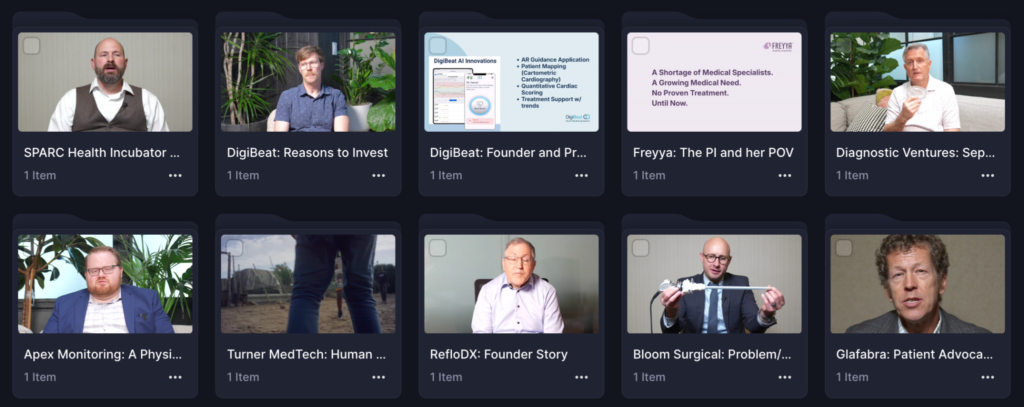
Watch the full collection → https://f.io/u68BxtiO
Who We’ve Done This For
- SPARC Health Incubator / Park City Angels
- BioUtah Trade Association
- 1871 Chicago Tech Incubator
- Biotech Showcase
- Zach’s Small Cap Research
QUOTES
“Terrific to work with — professional in every way, and really expert at navigating many different types of companies and getting their personalities across.” — Kelvyn Cullimore, CEO, BioUtah
“The stories really nailed the nuances of the business, the problems they were trying to solve, and most importantly, the people — and it all came together in a way that felt natural and compelling.” — Alex Wallberg, General Manager SPARC Health, Operations Manager Park City Angels, and Co-Founder, SPARC Labs.
“Rare Sightings has a unique ability to just get in and get things done using modern techniques and traditional filmmaking craftsmanship.” — John Geletka, Founder, G+ and Mentor, 1871 Tech Incubator, Chicago
We appreciate the effort that went into capturing both the science and the human side of Freyya, and we’re excited to share this with potential investors and partners. —-Gabriele G. Niederauer, PhD, FAIMBE, CEO and Co-Founder, FREYYA, San Antonio
Let’s talk about this opportunity for your member companies.
Thanks! Jeff Walker, Managing Partner, Rare Sightings LLC
312-286-9934
Some partnerships start narrow and grow into something larger. Ours with SPARC Health is one of them.
Content Carnivores helped develop the SPARC Health name and brand identity when the organization was a new initiative looking to consolidate Utah’s healthcare innovation ecosystem under a single banner. The acronym we landed on — Startup Platform for Advice, Resources, and Community — gave the org a clear identity and a usable shorthand. SPARC has since grown into a full-fledged accelerator, affiliated with Park City Angels, BioUtah, BioHive, and the Governor’s Office of Economic Opportunity, supporting cohorts of early-stage companies in medical devices, diagnostics, and biotech.
Several cohorts in, SPARC came back with a new question: their founders had real stories — credible technology, real clinical traction, compelling personal arcs — but no consistent way to tell those stories on video. Pitch decks and stage reps weren’t enough. SPARC wanted something more durable. Something a founder could send before an investor meeting, embed on a website, share on LinkedIn, or hand to a prospective partner.
We knew exactly who to bring in.
Enter Rare Sightings
Content Carnivores has now partnered exclusively with Rare Sightings, LLC, the Chicago / Los Angeles / Park City–based production company with twenty-plus years of experience producing video for clients ranging from early-stage startups to Fortune 500 brands. Documentary sensibility, deep healthcare and life sciences specialization, and a modern production pipeline made them the obvious choice for cohort-scale founder storytelling.
Rare Sightings built the program specifically for this kind of engagement, and SPARC became the proof-of-concept that’s now the foundation of their BIO 2026 and trade association offering.
View the videos from this project here: https://f.io/u68BxtiO
Twelve Videos, One Cohort
The program produced twelve videos across the SPARC cohort. Among the founders featured:
- DigiBeat (Cliff Steele) — a digital cardiac stethoscope with an AR overlay for clinician training and earlier detection
- RefloDx (Greg Critchfield, MD) — SondeFlux, a wearable ultrasound patch designed to replace invasive testing for silent reflux (LPR)
- Diagnostic Ventures (Brian Bentley) — a rapid blood pathogen identification platform built on spinning disk and Raman spectroscopy, on the FDA Breakthrough pathway
- Apex Monitoring Systems — NeoPulse, a neonatal vital-signs harness
- Freyya (Gabi Niederauer) — pelvic health innovation
Some companies received a single founder overview. Others received two — typically a general-audience explainer paired with an investor cut, or a brand film paired with live pitch capture from SPARC’s Entrepreneur & Investor Summit. Same source interviews, different editorial logic, different audiences.
The Process
The program ran on a simple, repeatable workflow that the team has since formalized into the broader bulk-rate offering available to trade associations, accelerators, and VC portfolios at BIO 2026 and beyond:
Intake. Each company received a dedicated Google Drive folder. Founders uploaded what they already had — pitch decks, product photography, news coverage, prior video, URLs to reference content — into a structured intake document. No email-thread chaos, no missed assets, all approved material in one place.
Scripting. Documentary-style guided questions rather than scripted line reads. The goal was natural delivery from the founder — moments of real conviction, not a performance. The same source interview could produce both a tight investor cut (sharp, fact-driven, fast) and a warmer general-audience overview, with strict voice discipline about who speaks what and why.
Production. Two cameras, professional lighting, lav audio, sound mixer where dialogue mattered. Some interviews ran at SPARC’s Entrepreneur & Investor Summit — capturing on-stage pitches, backstage interviews, and crowd reactions as they happened. Others ran in studio with controlled time slots, batched across a small number of production days to keep per-video cost down.
Post. Footage ran through Rare Sightings’ AI-assisted editorial pipeline — automated transcription, segment scoring on signals like emotional peaks and confident takes, and a Final Cut Pro timeline assembled in advance so the editor could focus on shaping the story rather than scrubbing for the good moments.
Review. All review and approval happened in Frame.io. Founders, SPARC leadership, and the production team could leave timestamped comments directly on the cut. No PDFs of feedback. No version confusion. The link travels.
Delivery. Each company received their finished videos in formats suited for web, social, investor portal, and broadcast where applicable. SPARC received a full cohort reel that doubles as a sponsorship and recruitment asset for future cohorts.
“The stories really nailed the nuances of the business, the problems they were trying to solve, and most importantly, the people — and it all came together in a way that felt natural and compelling.”
— Alex Wallberg, General Manager, SPARC Health; Operations Manager, Park City Angels; and Co-Founder, SPARC Labs
What Came Next
The SPARC program became the playbook. The same documentary-style founder package is now available at bulk-rate pricing for trade associations, accelerators, incubators, and VC portfolio groups attending BIO 2026 and similar industry conferences — structured so the companies that need a polished founder narrative the most can actually afford one.
We’re proud of how this work has evolved. From the name on the door to twelve founder films for the cohort, the through-line has been the same: helping life sciences founders tell stories that hold up under scrutiny — clinical, investor, regulatory — and still move people.
More to come.
About Our Exclusive Production Partnership with Rare Sightings, LLC
Content Carnivores is excited to announce an exclusive production partnership with Rare Sightings, LLC — a video production company with offices in Chicago, Los Angeles, and Park City, Utah, and more than twenty years of experience producing video across the full spectrum of clients and formats. Check it out at https://rare-sightings.com
That range is real. Rare Sightings has produced fast-turn internal videos for early-stage startups and international broadcast commercials for Fortune 500 brands. Founder explainers shot in a single morning, and brand films for global events. Pitch-day coverage, investor cuts, instructional content, patient education — the breadth is the point, and it’s why this partnership made sense for us.
Here’s what we’re excited about.
An AI-assisted editorial pipeline that compresses the rough cut from hours to minutes
Rare Sightings has built a proprietary post-production workflow that ingests raw interview footage, transcribes it, and scores every usable segment on signals like pushback, repeat takes, emotional peaks, and off-camera prompts. The output is a Final Cut Pro timeline with the picture edit already assembled. Editors get to do the part that actually matters — shaping story — without spending hours scrubbing for the gold. It’s one of their process strengths that allows for efficiency, effectiveness and affordability.
A documentary sensibility, not a corporate one
Their interviews are guided questions, not teleprompters. Documentary editing, not polished performance. The result feels honest, moves quickly, and holds attention — which is exactly what most corporate video gets wrong.
Strict voice discipline across formats
The same founder, product, or research story can become an investor cut (sharp, dramatic, fast), a general-audience overview (warm, accessible), a regulatory-compliant instructional piece (factual, calm), or a peer-to-peer professional video — each with its own rules about who speaks what and why. That kind of editorial precision is rare, and it’s part of why their work travels so well across audiences.
A studio-as-a-service capability for catalog-scale work
Beyond conventional video, Rare Sightings builds out turn-key product photography operations at industrial scale — equipment selection, throughput modeling, multi-tier retouching pipelines, and flexible ownership models that let clients either keep the studio running with RS as the operator or take it in-house after the initial catalog ships. It’s a production discipline most video companies simply don’t have.
Repeatable batch production for cohorts
Whether it’s an accelerator, a trade association at a major conference, or a portfolio group, Rare Sightings has built the operating model to deliver a full slate of videos in a single production block — at a rate that actually works for early-stage companies. The program runs on shared infrastructure: standardized Google Drive intake folders, Frame.io collaborative review, batched shoot days, and a documentary house style that holds up across a dozen subjects.
End-to-end technical chops
Automated transcription, lav audio matching workflows, FCPXML generation, FFmpeg cut assembly, Frame.io delivery, multi-camera live event capture, drone coverage, color, sound, motion graphics. The stack is modern, the workflow is tight, and the deliverables are clean.
Specialization that matches the work we care about
Deep experience in healthcare, life sciences, medtech, biotech, and diagnostics — verticals where the editorial bar is high, the regulatory considerations are real, and the stakes for getting the story right are higher than most marketing video ever encounters.
For Content Carnivores clients, this partnership means we now have a deeply capable production arm behind everything we do — from a single founder video to a multi-company batch shoot at a national conference. We’ve worked alongside Rare Sightings long enough to know how good they are. Making it official just felt right.
More to come.
Wastewater surveillance, also known as wastewater-based epidemiology (WBE), is increasingly recognized as a powerful tool for public health. It offers an early warning system for various infectious diseases and aids in predicting outbreaks. Our interest in this critical area was particularly piqued by a recent incident in North Carolina, where the detection of mpox viral particles in wastewater samples prompted health officials to issue an alert, even before clinical cases of that specific clade were reported. This compelling real-world example, highlighted in a recent press release from our client, GeoVax, underscored the immediate relevance and potential of WBE. It motivated us to delve deeper into how this innovative approach works and to share our findings here.
This method leverages the fact that many pathogens, or their genetic material, are shed by infected individuals (even those who are asymptomatic) into the wastewater system through feces, urine, or other bodily fluids.
How Wastewater Surveillance Works
- Shedding of Pathogens: Individuals infected with certain viruses or bacteria—such as SARS-CoV-2 (the virus causing COVID-19), influenza, RSV, or even poliovirus—shed genetic material (DNA or RNA) or whole pathogens into their bodily waste. This shedding can occur even before symptoms appear or in individuals who never develop symptoms, making it a valuable early indicator.
- Collection of Wastewater Samples: Wastewater utilities collect samples of untreated municipal wastewater from various points within the sewer system, typically at wastewater treatment plants. These samples represent a pooled aggregate of waste from thousands, or even millions, of people connected to that specific sewershed (the geographic area served by a particular sewer system).
- Laboratory Analysis: The collected wastewater samples are transported to laboratories for analysis. Advanced molecular techniques, primarily quantitative polymerase chain reaction (qPCR) and genomic sequencing, are used to detect and quantify the presence of specific pathogen genetic material.
- qPCR: This method amplifies specific DNA or RNA sequences, allowing scientists to determine the concentration of a pathogen in the sample. Higher concentrations generally indicate more widespread infection in the community.
- Genomic Sequencing: This goes a step further, allowing researchers to identify specific variants or strains of a pathogen (e.g., new SARS-CoV-2 variants or, as in the North Carolina case, a specific clade of mpox) and track their prevalence.
- Data Interpretation and Public Health Action: The laboratory results are then analyzed and interpreted by public health officials. This information helps them:
- Detect Early Trends: Wastewater data can show increases or decreases in disease trends days to weeks before they are observed through clinical testing or healthcare visits. This is particularly crucial for asymptomatic cases that might not seek medical care.
- Complement Clinical Data: WBE provides a community-level snapshot, independent of individual testing behaviors, healthcare access, or testing availability. It complements clinical surveillance data, offering a more complete picture of disease spread.
- Predict Outbreaks and Inform Response: By monitoring changes in pathogen concentrations and identifying emerging variants, public health officials can anticipate potential outbreaks, allocate resources (e.g., testing sites, vaccination campaigns), and implement targeted public health interventions (e.g., public health messaging, mask mandates).
- Monitor Antimicrobial Resistance: Wastewater can also be analyzed for the presence of antibiotic-resistant genes, providing insights into antimicrobial resistance trends within a community.
Credible Articles and Key Insights
- Centers for Disease Control and Prevention (CDC) National Wastewater Surveillance System (NWSS): The CDC has been instrumental in establishing and promoting wastewater surveillance, especially during the COVID-19 pandemic. Their website provides comprehensive information on how WBE works, current data for various pathogens (COVID-19, influenza, RSV, mpox), and its role in public health. They highlight that wastewater data can provide “early indications of changes in community levels of SARS-CoV-2, as well as emerging variants of the virus, sometimes weeks ahead of other public health data.”
- Reference: https://www.cdc.gov/nwss/how-wws-works.html
- North Carolina Department of Health and Human Services (NCDHHS) Press Release on Mpox Detection: The NCDHHS issued a press release on April 22, 2025, detailing the detection of Clade I mpox viral particles in wastewater samples in Greenville, NC. This was particularly significant as Clade I mpox had not been previously reported in North Carolina, demonstrating wastewater surveillance’s ability to identify the presence of a pathogen before clinical cases are confirmed.
- National Academies of Sciences, Engineering, and Medicine Reports: Reports commissioned by the CDC, such as “Wastewater-based Disease Surveillance for Public Health Action,” provide in-depth analysis of the benefits, challenges, and future of WBE. They emphasize its value beyond COVID-19 for various infectious diseases and its ability to capture pre-symptomatic and asymptomatic cases.
- “Wastewater surveillance as a sentinel for disease” (UNEP): This article highlights that wastewater sampling has been used for a long time to detect diseases like polio and has expanded significantly since COVID-19. It emphasizes WBE’s ability to “cost-effectively gauge the extent to which a disease might be circulating in a community, without solely relying on data from people using health services.”
- “Wastewater-based epidemiology as surveillance and early warning of infectious disease outbreaks” (ResearchGate/PubMed): Several review articles delve into the potential of WBE as an early warning system. They emphasize that “the biological principle underlying wastewater as a leading indicator is that many infected individuals excrete the virus in biological samples before they develop symptoms, and thus before seeking medical care.”
- “Advances in Wastewater-Based Epidemiology for Pandemic Surveillance: Methodological Frameworks and Future Perspectives” (MDPI): This recent review underscores WBE’s role in “transforming pandemic surveillance from reactive containment to proactive population health management.” It discusses advancements in pathogen detection technologies (qPCR and metagenomics) and predictive modeling.
- Reference: https://www.mdpi.com/2076-2607/13/5/1169
Key Advantages for Outbreak Prediction
- Early Detection: Pathogen shedding can occur before clinical symptoms, allowing for earlier detection of increasing cases.
- Population-Level Data: Provides a broad overview of community infection trends without relying on individual testing or healthcare-seeking behavior.
- Detection of Asymptomatic Cases: Captures infections in individuals who may never get tested or seek medical care.
- Identification of Variants: Genomic sequencing allows for tracking of emerging and circulating variants of concern.
- Cost-Effective and Efficient: A single sample can provide information for a large population, making it more efficient than widespread individual testing.
- Privacy-Preserving: It collects aggregate data, avoiding individual identification.
While wastewater surveillance is a powerful tool, it’s most effective when integrated with other public health surveillance systems to provide a comprehensive understanding of disease spread and inform public health decisions.
Efficient, Cost-Effective PR
Maintaining visibility is essential. Today, with money for science companies tight, you might want to stay on the sidelines. Don’t. Strategic PR reports your milestones, builds credibility, and makes you stand out while everyone else is sitting out. Even announcements of future intentions serve to position your company within the industry. That’s why Carnivores has created an effective PR program that complements your operations and does not divert time and budget from core innovations.
Core Services for Every Release
Content Enhancement
The company knows the facts. Our science writers know how to finesse.
- Professional editing and formatting of your draft content
- Strategic headers, subheads, and properly formatted hyperlinks
- Featured key takeaways that highlight critical information
Visual Elements
Graphics tell the story in new ways. That’s critical, and included in the price.
- 3-5 custom graphics designed to highlight key messages
- No additional fees for including visuals in your release
- Repurposable graphics for social media content
Supporting Information
The right mix of proof-points.
- Structured sidebar containing relevant background information
- Professional biographies and executive information
- Curated links to supporting materials (PDFs, videos, decks)
Performance
Analytics and Benchmark Measurement
- Comprehensive tracking
- Publication location reporting
- Engagement statistics to measure impact
Two Simple Distribution Tiers
Tier 1: Standard Distribution Protocol
- Indexing on Google and other search engines
- News portal syndication
- All core services listed above
Tier 2: Enhanced Life Sciences Distribution Network
- Syndication to specialized life sciences outlets like BioSpace
- Custom query of our life sciences journalist database
- Personalized emails to the most relevant journalists
- Release synopsis sent directly to targeted media contacts
- Comprehensive tracking of email opens, shares, and link clicks
One More Thing: Flexibility
Not every one of your releases will be at the same level of importance. Our approach allows you to level up or down between Tier 1 and Tier 2 based on your announcement, to help scale costs and allow for more frequent news updates. Ask us how that works to your advantage.
Don’t Forget SEO
Regular press releases provide a significant SEO advantage. Search engines favor websites with consistent, fresh content. Each release creates newly indexed pages, generates valuable backlinks, and expands your digital footprint with targeted keywords. This publishing cadence signals to Google that your company is active and authoritative, improving search rankings and enhancing discoverability for partners, investors, and customers. Even modest announcements contribute to cumulative SEO benefits that paid advertising cannot match.
We Hope You Will Consider Content Carnivores for Upcoming Communications and Press Releases
Content Carnivores has published over a thousand press releases for life sciences companies of all sizes. Our methodology is refined through empirical data into a streamlined system that preserves quality while eliminating inefficiencies. Clients work with category experts who understand scientific concepts, not sales representatives. We approach every project with genuine enthusiasm for science and a commitment to advancing our clients’ work through effective communication. We’d be happy to walk through our framework and pricing relevant to other services.
We look forward to discussing your upcoming news.
Examples:
By Chelli Miller Biotech Lead Partner @ Content Carnivores |
We all say it, but it’s true: the drive behind life sciences innovation, the relentless pursuit of cures, is deeply personal. You don’t just work in this field; you invest your heart and soul. My connection to Pacylex Pharmaceuticals and the journey they’re on with AML is a perfect example of a rare intersection of the personal and the professional.
Professionally, this journey started with Pacylex’s CEO, Michael Weickert, Ph.D, someone I’ve known since the very beginning of my two decades in healthcare. I remember his work at Sea Medical, inspired by his family’s experience with extensive hospitalization of their new baby. His emotional personal experience, coupled with his scientific knowledge, helped make the Sea Medical story resonate with me. That same passion fueled Pacylex’s work on a novel approach to treating acute myeloid leukemia (AML), a particularly brutal cancer, especially for children.
AML, as I’ve come to understand it more deeply, is a cancer that affects the blood and bone marrow. It’s an aggressive disease where immature blood cells rapidly accumulate, hindering the production of normal blood cells. It’s particularly devastating in children. Pediatric AML, pediatric cancer in general, presents unique treatment challenges. Children’s bodies metabolize drugs differently than adults, making it difficult to adapt adult treatment protocols. AML in children can be especially aggressive, and relapse is a significant concern. Finding effective therapies for relapsed or refractory AML – when the cancer doesn’t respond to initial treatment – is a major hurdle. Even then, adults are treated first, and only when safety and efficacy is determined, would a child be treated with a new treatment modality. The harsh reality is that the toxicity of existing chemotherapies takes a greater toll on growing children. This is a huge reason we need novel therapies that can also treat our young!
Content Carnivores started working with Pacylex when they were in the preclinical stage. They were developing a completely new way to attack AML. Their lead drug, zelenirstat, is a first-in-class N-myristoyltransferase inhibitor (NMTI). It works by inhibiting myristoylation, a fatty acid modification crucial for certain proteins to function in cancer cell survival and proliferation. In simpler terms, zelenirstat targets key cancer-driving processes that depend on myristoylation, which kills cancer cells at drug levels that don’t harm normal cells. Think of it like this: Cancer cells use myristoylation to help them grow and spread. Zelenirstat is designed to stop that. It’s a novel approach, targeting the disease in ways other treatments don’t.
At about this time, life threw me a cruel curveball. A dear friend, someone I’ve known since I was practically a kid myself, called me. This was a friend whose family I adore – I even named my son after her daughter and son. She told me her 12-year-old granddaughter had been diagnosed with AML. As a new grandmother, myself, the news hit me like a ton of bricks.
My friends are a brilliant family living in the Chicago area. They assembled a team of researchers and experts, leaving no stone unturned. They fought tooth and nail to get their granddaughter into every treatment modality and clinical trial possible. We watched as her little body endured round after round of treatments, hoping against hope for a positive response.
A few devastating years passed for my friends, and Pacylex continued its work. I watched every avenue and every potential treatment be exhausted. Then, just before this beautiful girl’s 16th birthday, she, with heartbreaking grace and acceptance, planned her 16th birthday party or her funeral. There was nothing left to try. Her body was just too weak. I tear up just thinking about this!
And that’s where Pacylex’s work became even more significant to me. Their novel mechanism was something her body hadn’t encountered before. Preclinical studies suggested AML cells, including AML stem cells, are particularly sensitive to zelenirstat. It’s designed to trigger apoptosis and cell death in AML. But it was too late. She had run out of time. We attended her 16th birthday, which was also her funeral. That experience, that loss, is seared into my memory and my heart.
Personally, this child’s diagnosis and battle with AML created a powerful connection to my professional work with Pacylex. I wish that the treatments being developed by Pacylex Pharmaceuticals had been advanced to the point where she might have participated in their trials. This was a perfect case for a Compassionate Use Designation – an FDA designation that allows patients with serious or life-threatening conditions to access investigational drugs or medical devices outside of clinical trials when no other treatment options are available. Zelenirstat data continues to indicate the need for the designation for AML as well as other tumor types.
Fortunately, the company is advancing, meaning others like her will have a fighting chance against this devastating disease.
Today, Pacylex is making real progress. They have clinical data. A published Phase 1 dose escalation safety and tolerability study in 29 heavily pre-treated patients showed that zelenirstat was well-tolerated, with most adverse events being mild gastrointestinal side effects. The study also showed that zelenirstat prolonged cancer progression-free and overall survival in solid tumor patients receiving the recommended Phase 2 dose. They’re moving into Phase 2, and the results are promising.
I still see my friends on Facebook, still actively supporting other families battling AML, still organizing blood drives in their daughter’s name. It’s both heartbreaking and inspiring. Every time I see this, I am reminded of the family’s desperate quest to find trials, novel treatments—anything to help the medical team save their loved one.
This isn’t just a professional interest for me anymore. It’s deeply personal. It reinforces why we do what we do in healthcare. Cancer is personal. We all know someone who’s lost the battle, and we all know countless lives could be saved with the right innovation. We need multiple innovations because each body, at every age, is different.
I’m incredibly proud to be involved in getting the word out about Pacylex’s work. It’s more than just marketing and PR; it’s about advocating for the funding and support companies and families desperately need. We need to accelerate the pace and funding of innovation because every day counts. Every child, every parent, deserves a chance. And that’s why I’m here, telling this story, because it’s not just their story; it’s part of mine.
Marketing is weird. You head in one direction, ie, attempting to foster clinical trials between two countries. And you wind up at an International Film Festival with an all access press pass. I guess that’s why we love it! And why we have multiple agency affiliations connected by our partners and their varied interests. So here’s how a science company ended up doing some non-science related storytelling.
The Background
An ongoing dialogue between BioUtah and various UK trade organizations, including representatives of the British government, continues to strengthen ties between the two regions. Initiated by a 2023 Memorandum of Understanding focused on supporting biotech companies, these discussions have fostered a valuable connection. The program has been designed to create a flow of business ideas and relocations for companies looking to expand into the UK, or vice-versa. Content Carnivores partner, Chelli Miller, has been a part of the progress and has co-authored a proposal for leveraging clinical trials as a ‘first step’ in bringing the MoU to fruition.
The Twist
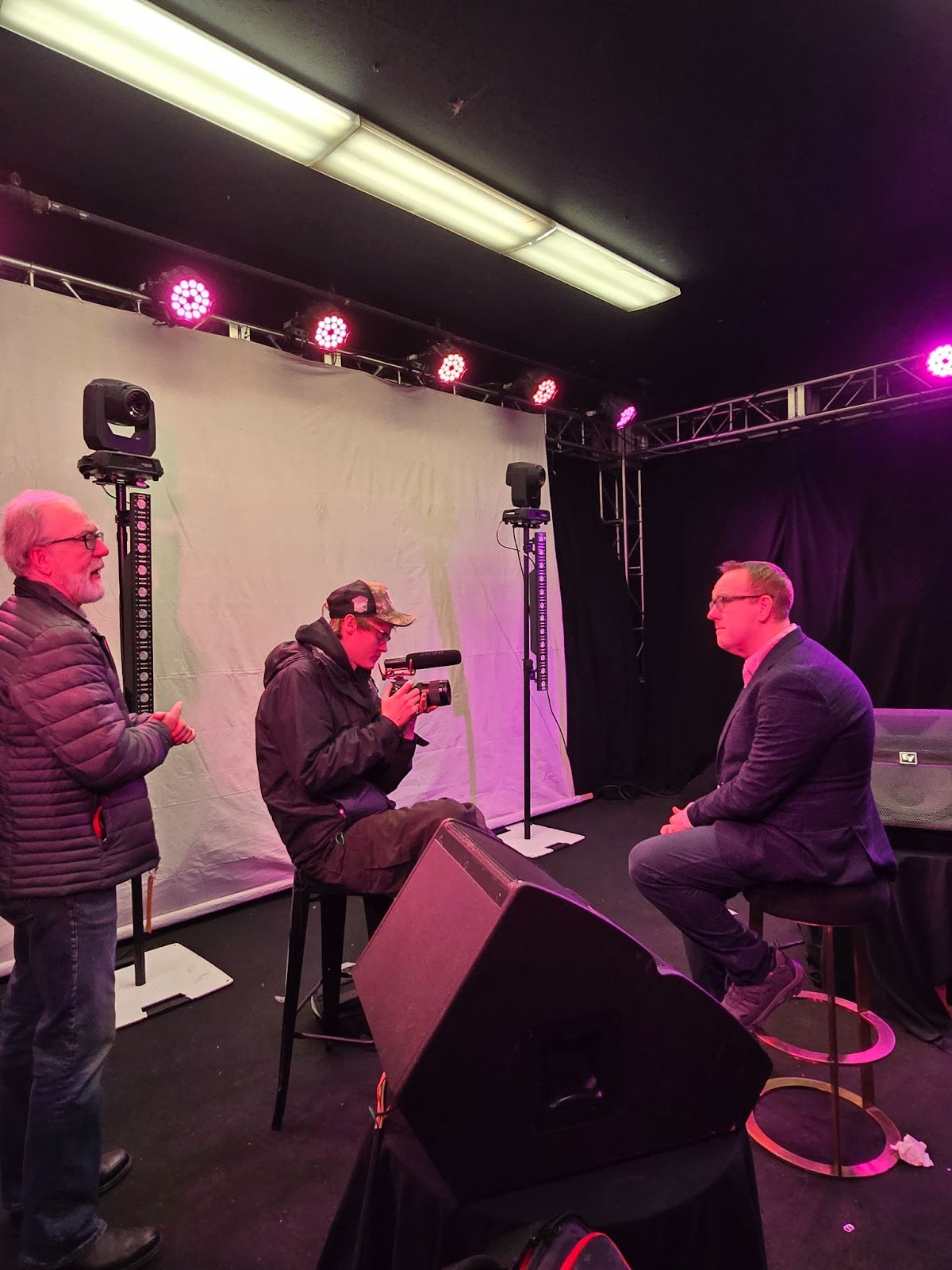
This burgeoning relationship recently led to a unique opportunity at the Sundance Film Festival. Content Carnivores, a BioUtah Member and a participant in these ongoing discussions, was invited by the UK/Wales Trade Association to film the premiere of “Brides,” which they helped fund. The Carnivores team, including their relationship with film company Rare Sightings, captured the excitement of the premiere at The Egyptian Theatre, the film’s after-party, and the vibrant energy on Main Street. This collaboration exemplifies the unexpected possibilities emerging from this transatlantic partnership. Stay tuned for future developments in the Life Sciences chapter of this evolving story! And the role that Content Carnivores plays in promoting global collaboration.
The Results
The annual JPMorgan Healthcare Conference in San Francisco has long been considered the healthcare industry’s premier gathering, but this year’s event revealed something deeper than just business as usual. Content Carnivores sent a pre-conference LinkedIn survey to 1,000 biotech executives and investors pulled from its social media database. The results offered an intriguing glimpse into the industry’s mindset: while only about 10% planned to attend in person, the overwhelming majority expressed optimism about the sector’s future.
A Changing of the Guard
Perhaps the most telling shift was in who didn’t show up. Many senior executives who responded to our survey bypassed the event, citing San Francisco’s ongoing urban challenges – a diplomatic way of expressing their frustration with the city’s visible struggles. However, their absence cleared the way for something unexpected: a new generation of healthcare professionals who energized the conference floors and meeting rooms.
These younger attendees, many experiencing the conference for the first time, tackled challenges without the weight of industry cynicism. Their social media posts and follow-up communications sparkled with enthusiasm about merging science, business, and global health impact. As one first-time attendee put it in a LinkedIn post, “This isn’t just about deals – it’s about seeing how our work could change lives across the globe.”
The Money Dance
While billion-dollar deal announcements from JPMorgan ignited early optimism, the real story unfolded beneath the headlines. A striking contrast emerged between bank analysts (who, as one participant quipped, “are paid to be pessimistic”) and the broader sense of possibility that energized most discussions.
The Funding Paradox
Yet beneath this optimistic surface, a more complex reality took shape. One biotech CEO, currently raising a $40 million Series C round, captured the moment perfectly: “People are interested in talking, but they’re not writing checks.” This sentiment echoes across the industry, where despite promising scientific advances and fast-track designations, capital remains stubbornly on the sidelines.
The reality cuts deep: companies with drugs in advanced human trials, even those with FDA fast-track or orphan disease designations, struggle to translate regulatory acceleration into funding momentum. Deal flow indicators across the sector continue to show stagnation or decline, a trend that has persisted for several years.
The funding challenge looms at every level: from seed-stage companies emerging from university tech transfer offices to established public companies managing shareholder expectations. Each competes for limited capital, often against similar technologies and approaches.
The Elephant in the Room
The Inflation Reduction Act (IRA) discussions sparked some of the conference’s most heated moments. When the topic surfaced – and it surfaced often – conversations transformed. Investment panels sometimes devolved into what one attendee dubbed “sophisticated venting sessions” about profit margins. Yet these debates seemed strangely disconnected from the conference’s broader spirit of innovation and possibility.
A More Nuanced View
The Squire Patton Boggs law firm’s evening session broke through the usual talking points, exploring how administrative changes could reshape healthcare delivery. Instead of fixating on bottom lines, speakers examined how policy shifts could transform clinical trial diversity and global health equity. The packed room and spirited discussion revealed an appetite for deeper, more nuanced conversations.
Beyond the Headlines
Veterans know that splashy deal announcements don’t always signal broader market momentum. Throughout the event, an interesting tension played out between market skepticism and innovation optimism.
The After Hours That Matter
Evening receptions proved crucial in fostering genuine connections. Major firms and organizations transformed typical networking events into vibrant forums for exchange. These gatherings – some welcoming upwards of 250 attendees – sparked conversations that couldn’t happen in formal sessions.
These hosts deserve special recognition. Their commitment to building community extended the conference’s impact well beyond official hours. Discussions meandered from scientific breakthroughs to personal missions, planting seeds for future collaborations.
A Balanced View Forward
The conference painted a complex picture of an industry in transition. Young healthcare professionals face the same fundamental challenge that has always defined this sector – bridging the gap between scientific promise and financial backing. There was a strong emergence of regional groups representing rapid growth outside of the usual Life Sciences hubs. For the first time, BioUtah sponsored the State BioTech reception, signaling the progress and commitment to this category.
Perhaps most encouraging was the shift in how participants measure success. While deals and dollars remain crucial, a new understanding emerged: healthcare’s future demands both profitability and purpose. As one young executive observed during an evening reception, “We’re not just here to make money – we’re here because we believe we can make a difference.”
The Reality Check
This idealistic drive exists within unyielding market constraints. The path from innovative science to funded company demands not just breakthrough ideas but endurance through years of fundraising challenges. As one veteran biotech CEO put it, “We remain optimistic because we have to be. The solutions we’re developing matter too much to give up.”
CHICAGO and PARK CITY, UT – January 5, 2025 – Content Carnivores, a leading healthcare communications firm, is proud to announce its 18th consecutive year participating in the JP Morgan Healthcare Conference and Biotech Showcase in San Francisco. These concurrent events, taking place this January, represent the largest gathering of healthcare, biotech, medtech, diagnostic, and pharmaceutical companies worldwide.
In general, the Carnivores leadership team will navigate the busy roads at this landmark healthcare intersection to facilitate awareness, meetings, and thought leadership.
On a community level, Carnivores principals will moderate company presentations at Biotech Showcase, presenting emerging and established companies to a global audience.
- We’re not alone in feeling optimistic about the life sciences in 2025. Our clients, colleagues and healthcare leaders welcome a neutral, if not favorable, investment climate after 2024’s headwinds.
- As deal flow improves, companies must maintain a cadence of compelling narratives that keep investors, partners, and stakeholders interested. This has proven the most cost-effective way to communicate the company’s vision, differentiation, and ‘reason for believing.’
- To prepare for upcoming outreach and/or capital raises, companies are advised to take a hard look at their websites and video communications to determine if the belt-tightening of the past couple of years has resulted in materials that are no longer up to date, or even reflective of the current mission.
Clients Taking Center Stage:
Content Carnivores is proud to support several clients who will be present at the conferences during JPM Week, including:
- BioUtah: The leading trade association for the life sciences industry in Utah. BioUtah will participate in hosting a Multi-State Reception on Sunday night, kicking off the week with networking opportunities alongside other state bioscience associations. This event marks BioUtah’s first year sponsoring a reception during JPM Week, demonstrating its commitment to the global life sciences community and the industry’s growth in Utah. BioUtah CEO Kelvyn Cullimore will be on hand to discuss and promote the state’s business-friendly environment and growing life sciences ecosystem.
- Colliers International: A global leader in commercial real estate with a growing focus on life sciences in Salt Lake City. Colliers will highlight the region’s burgeoning life sciences sector and its expanding need for specialized lab space, headquarters, and other facilities. Managing Partner Chris Kirk will represent the company and their expanded focus on science and technology companies.
- GeoVax Labs: A clinical-stage biotechnology company developing next-generation vaccines for infectious diseases and cancer. GeoVax will present at Biotech Showcase, highlighting their recent $400 million BARDA grant for a 10,000-patient trial and, separately, updates on their progress with their head and neck cancer therapy.
- Geovax CEO David Dodd will present at Biotech Showcase on January 14, 2025, at 10:30 am PST at the Hilton Union Square, 333 O’Farrell Street, Yosemite A (Ballroom Level).
- Pacylex Therapeutics: This exciting company, with its first-in-class therapy, zelenirstat, presents a compelling investment opportunity in the oncology space. Zelenirstat targets a novel pathway, potentially surpassing existing treatments in efficacy and tolerability. Pacylex CEO Michael Weickert is raising a Series B financing and is available to connect through the BIO partnering system.
Read the full release here. https://www-contentcarnivores-com.reportablenews.com/pr/contact-carnivores-celebrates-18-years-at-jp-morgan-healthcare-conference-and-biotech-showcase?_gl=1*1qdaws6*_gcl_au*OTA1MDczNjgyLjE3MzU4NTc4MzM.

The success of a program. The loss of a client. A grateful conclusion.
The Problem:
Zacks Small Cap Research (SCR) provides in-depth research reports on a diverse range of emerging companies seeking capital, spanning sectors like mining, crypto, biotech, medtech, technology, blockchain, and more. While their analysts produce comprehensive, bank-style reports offering valuable insights into each company’s mission, vision, and market opportunity, their existing marketing strategy presented a challenge. Zacks SCR relied heavily on an outdated email marketing system with a static template, limiting their ability to:
- Drive website traffic: Their existing, limited email network had static results typical of the >1% open rate for investor-focused emails.
- Expand their reach: They drove people to a registration page to download reports–a practice that would have most investors wary of future spam (which was true).
- Maximize content impact: They had a one-and-done mentality for sending the email once the report was published.
- Keep Up: With dozens of reports published quarterly, and hundreds of companies to service, the Zacks team simply could not generate the right content in a timely manner.
The Opportunity
While this limited approach, coupled with a minimal social media presence, hindered Zacks SCR’s ability to maximize, it provided a unique insight. Because the existing email program, while outdated, still generated consistent traffic, it allowed visibility into a real-time benchmark against which to measure the effectiveness of a new content marketing strategy. In many cases the old program is changed, or discontinued. Continuing the old program might have been seen to cause branding problems. Read on to see how this opened other doors.
The Content Carnivores Solution:
Content Carnivores was engaged to revitalize Zacks SCR’s marketing efforts and amplify the reach of their research. Recognizing the value of the existing email program as a benchmark, Content Carnivores implemented a multi-faceted strategy that complemented and expanded upon the existing efforts. This included:
- Content Repurposing: Transforming complex research reports into digestible and engaging social media content, featuring compelling headlines, key findings, and insightful data, tailored for a general audience.
- Multi-Platform Distribution: Strategically distributing content across major social media platforms like Facebook, Twitter, and LinkedIn to maximize visibility and reach a wider investor audience.
- Amplified Reach: Leveraging their own extensive network and continuously expanding the number of social outlets to ensure maximum content exposure.
- Video Integration: Incorporating video content creation to provide companies with a dynamic medium to tell their story and connect with investors on a deeper level.
Analysis and Results:
The results were compelling: Content Carnivores’ content-driven strategy delivered a 280% increase in website traffic compared to the outdated email marketing approach. This underscored the power of their multi-faceted strategy in attracting and engaging a wider audience.
By running the existing email program concurrently with the Content Carnivores strategy, Zacks SCR gained the ability to conduct a real-time, head-to-head comparison of the two approaches. This provided invaluable data on the effectiveness of each strategy in driving website traffic and engaging potential investors.
When the CEO decided that the overall program was not impacting the companies covered with regards to increasing their share price, the program was paused. (Note: Content Carnivores programs are targeted to reach investors but never to solicit or encourage stock purchases or to impact the share price. That would be stock promotion. It’s illegal. We’re happy to get fired when the ‘ask’ has even the whiff of that kind of behavior.)
The impact of pausing the Content Carnivores program further validated its effectiveness. Thanks!
After three years of build up the website traffic, engagement and demographics of the audience, the pause caused significant declines:
- Social referral traffic decreased by 44%, resulting in a loss of over 700 website visits.
- Organic traffic plummeted by over 74%, highlighting the program’s indirect impact on search engine visibility and leading to a loss of 6,000 website visits.
- Stocktwits referral traffic fell by 62%, indicating a significant drop in engagement from retail traders.
We are extremely grateful to have these stats.
In effect we have data from before the program, during the program, and then after the program was suspended. These findings emphasized the crucial role of consistent and engaging content marketing in driving website traffic, maintaining online presence, and reaching target audiences.
It’s Just Marketing, right?
The Zacks SCR case study exemplifies the transformative power of a dynamic and comprehensive content marketing strategy in driving investor engagement and amplifying the reach of valuable research. By leveraging content repurposing, multi-platform distribution, and targeted outreach, Content Carnivores enabled Zacks SCR to connect with a wider audience, maximize the impact of their research, and achieve measurable results. In the end, the ability to conduct a real-time comparison of before, after, and after, provides invaluable insights and further validated the effectiveness of the Content Carnivores approach.